Search Result:
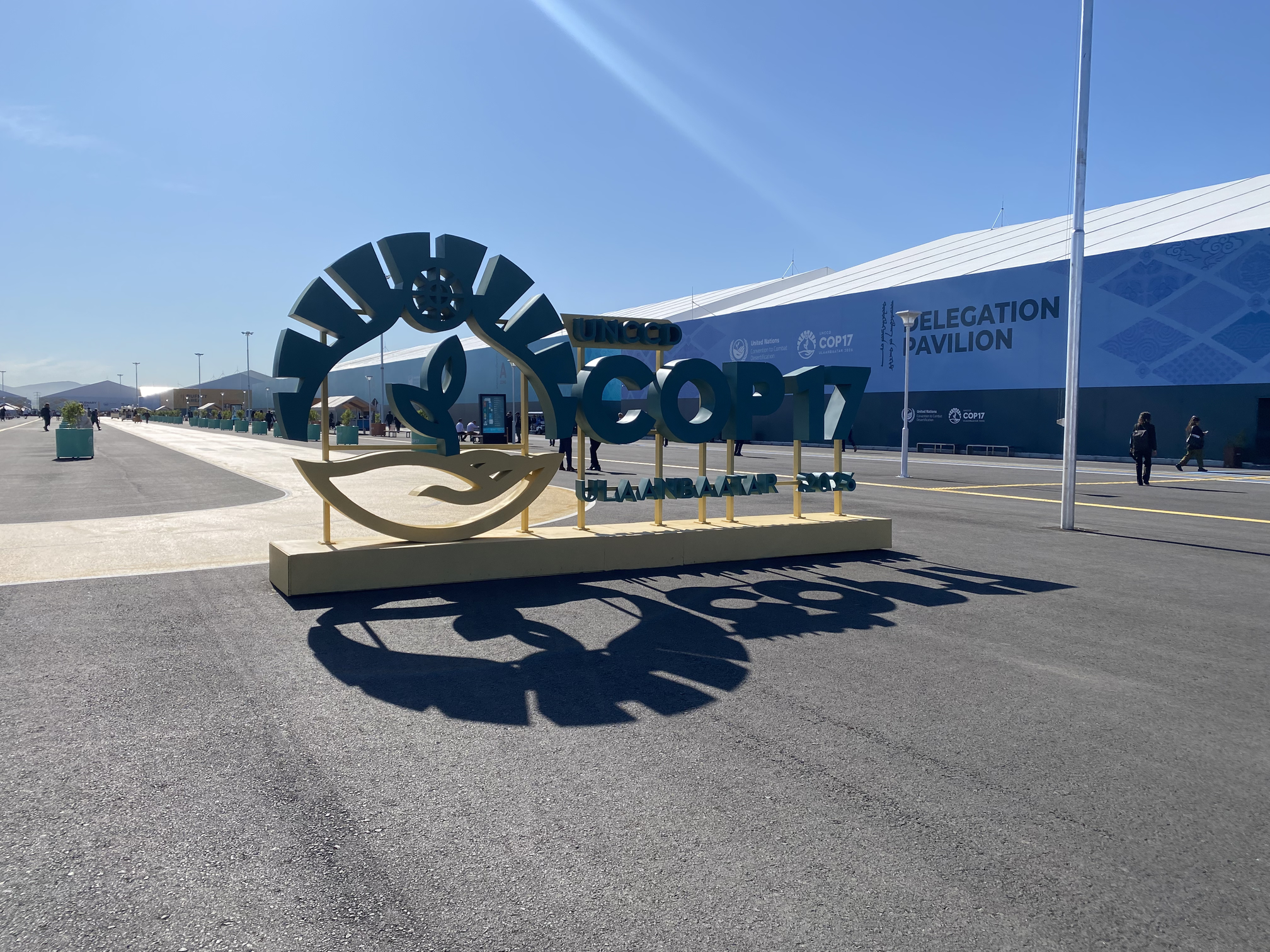
Beyond Projects: What It Takes to Sustain Restoration at Scale
At the 17th Session of the Conference of the Parties (COP17) of the United Nations Convention to Combat Desertification (UNCCD) in Mongolia, ERIP and its partners hosted a series of discussions on dryland restoration, restoration monitoring, and water resilience, exploring what it takes to maintain momentum, strengthen ownership, support local communities, and scale restoration impact across regions.
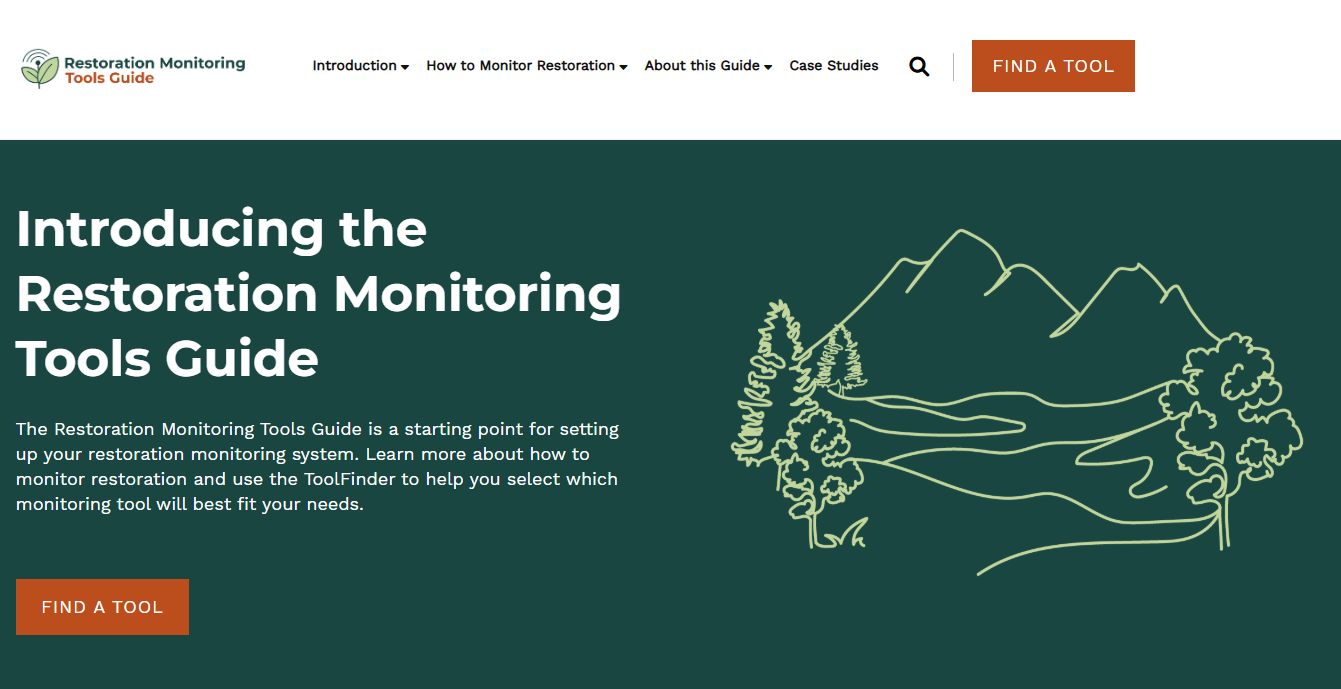
Restoration Monitoring Tools Guide
The Restoration Monitoring Tools Guide walks users through the steps setting up a restoration monitoring system, covering: 1) the essential steps for effective restoration monitoring; 2) how to select which monitoring tool best fits your needs; and 3) real-world examples of different restoration monitoring tools.
ERIP at UNCCD COP17: Restoring Land, Restoring Hope
ERIP child projects focused on restoration in and around protected and conserved areas (PCAs) took part in the Global Knowledge Exchange Workshop on “Strengthening the Effectiveness and Impact of Protected and Conserved Areas,” held from 18–22 May in Chengdu, China.
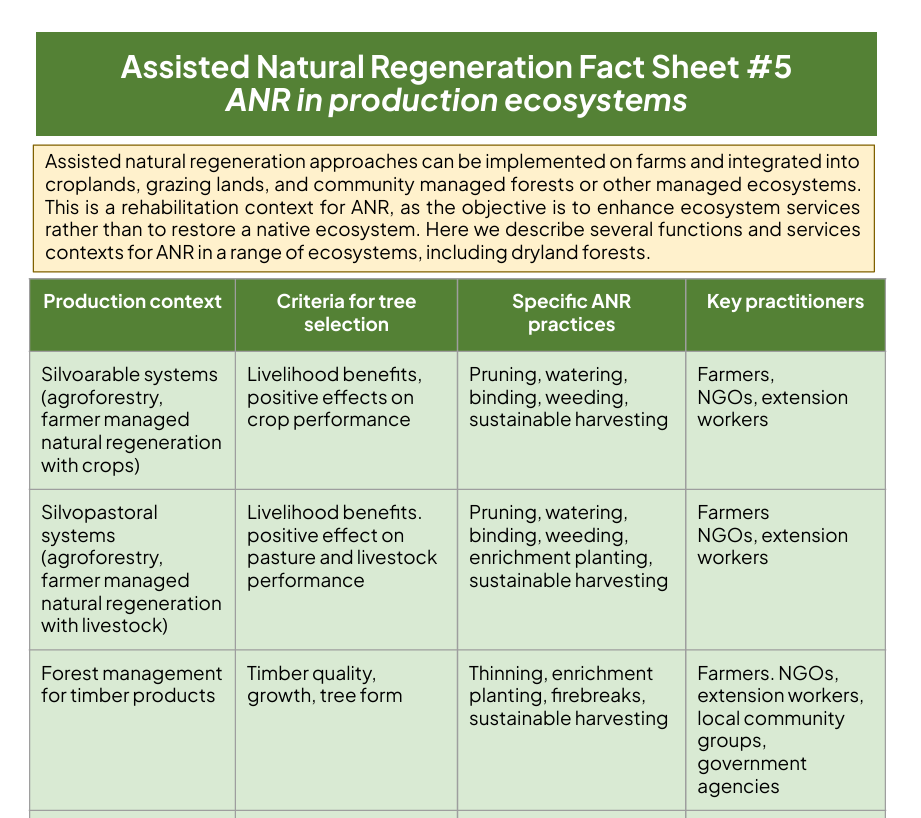
Assisted Natural Regeneration Factsheet 5: ANR in production ecosystems
Part 5 of a series of factsheets on Assisted Natural Regeneration (ANR) created by a team of global experts on ANR led by renowned ecologist Robin Chazdon. This installment provides an overview of ANR’s implementation potential in productive ecosystems, and includes translations in English, French, Portuguese, and Spanish.
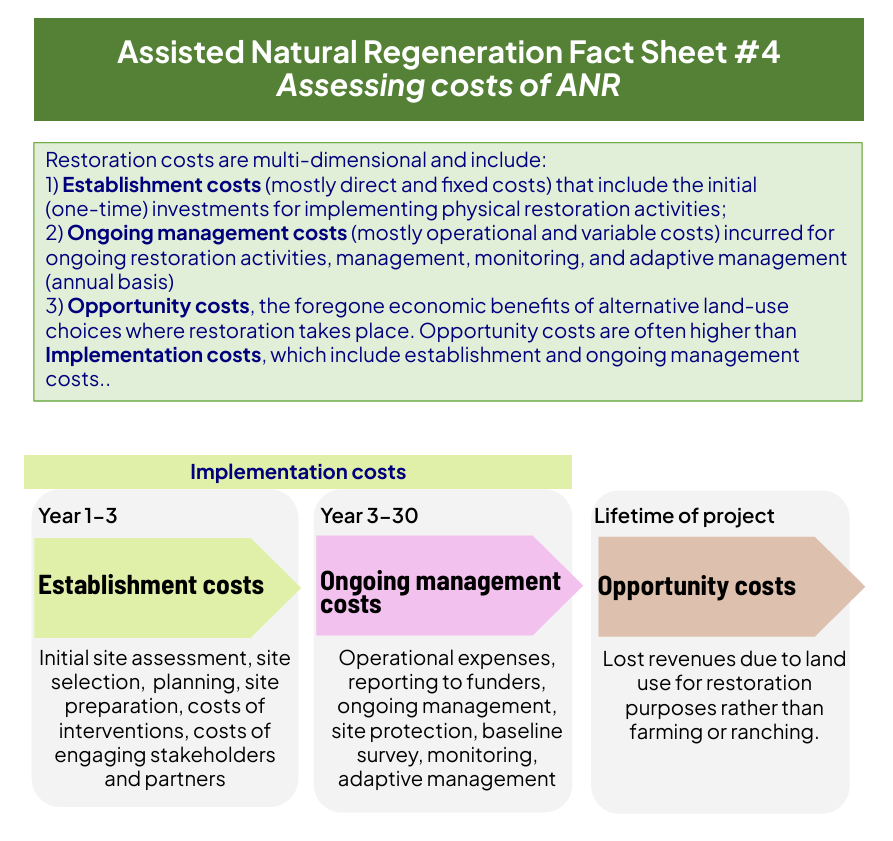
Assisted Natural Regeneration Factsheet 4: Assessing costs of ANR
Part 4 of a series of factsheets on Assisted Natural Regeneration (ANR) created by a team of global experts on ANR led by renowned ecologist Robin Chazdon. This installment provides a framework for assessing the costs of ANR, and includes translations in English, French, Portuguese, and Spanish.
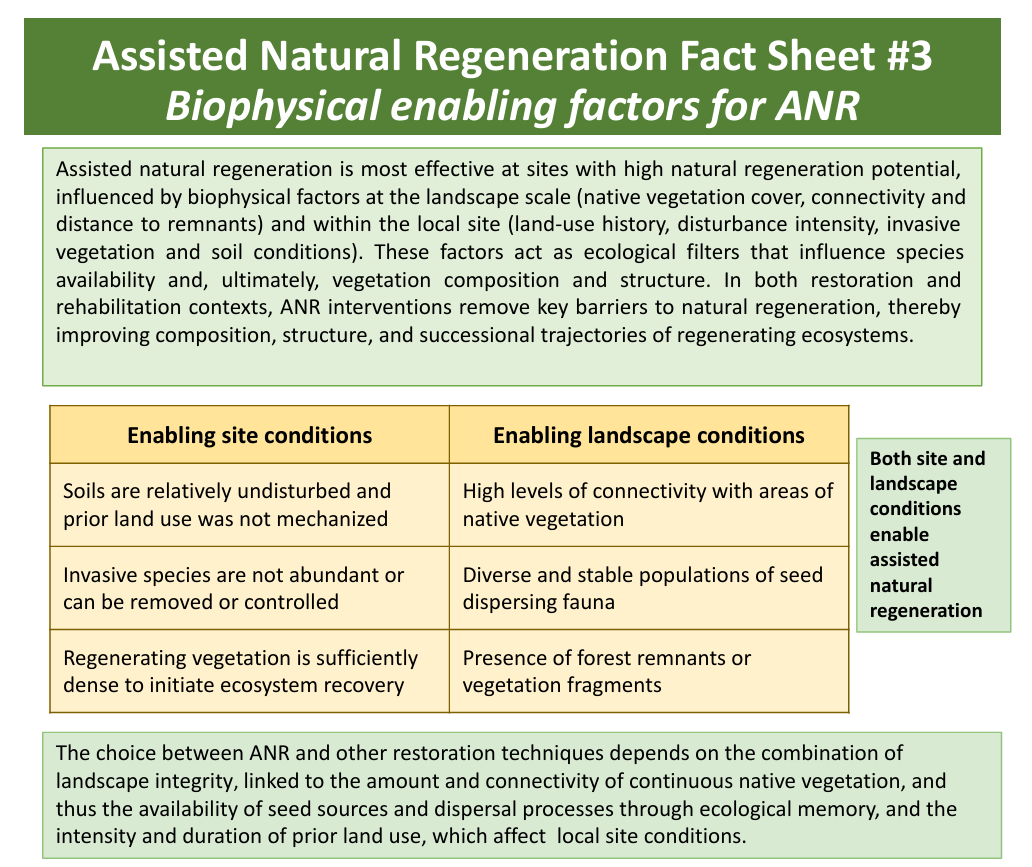
Assisted Natural Regeneration Factsheet 3: Biophysical enabling factors for ANR
Part 3 of a series of factsheets on Assisted Natural Regeneration (ANR) created by a team of global experts on ANR led by renowned ecologist Robin Chazdon. This installment provides an overview of ANR’s biophysical enabling factors, and includes translations in English, French, Portuguese, and Spanish.