Mozambique

  • Mecuburi
  • Matibane
  • Baixo Pinda

Forests, coastal dry forest, miombo woodland 

Forest reserves in Mozambique are the focus of restoration efforts, as they serve critical roles in biodiversity conservation, carbon storage, and local livelihoods. These ecosystems are under pressure from deforestation, poor land management, and climate change, leading to a decline in biodiversity and the services these environments provide.

  • Restoration Policy
  • Community Engagement
  • Financial mechanisms

Targets and Global Environmental Benefits (GEB)

  • 21K

    Hectares 
    under restoration

  • 80K

    Hectares under
    improved practices

  • 8.3M

    metric tons CO2eq mitigation

  • 24K

    Direct
    Beneficiaries

Property 1 Soil Ci 37898801

Restoration Ambition

The project aims to restore and manage forest ecosystems in Mozambique in line with national and global restoration goals. It will focus on creating the conditions needed for long-term impact by strengthening institutions and aligning policies for forest reserve management. 

Activities will include forest monitoring, restoration planning, support for community livelihoods, and delivery of basic services. Financing will be mobilized through new models and collaborative management partnerships. Knowledge sharing will be supported through capacity building, stakeholder engagement, and coordination at the regional level.  

Photo credit: © Jonathan Irish

Key Partners and Roles

Key partners in the project include the World Bank, which is responsible for implementation and oversight, and Mozambique’s National Directorate of Forests (DINAF), which leads execution and management. Local communities are actively involved in restoration activities and benefit from improved livelihoods and basic services. The private sector is engaged in developing innovative financing mechanisms and supporting market development. 

Supported by

  • Component 9

Led by

  • World Bank Group Logo

In Partnership with

  • Logo Mozambique National Directorate of Forests DINAF

Our Funding

Impact card image 01

10Million

GEF grants

Impact card image 06

100Million

co-funding

  • 1
  • /
  • 2
  • 1
  • /
  • 2
Property 1 Leaf Ci 90353819

How Mozambique
will achieve this

Mozambique is taking coordinated action to restore forest reserves in Nampula province, focusing on Mecuburi, Matibane, and Baixo Pinda. These areas face ongoing threats from deforestation and environmental degradation. The strategy brings together institutional reform, community engagement, and sustainable financing to support long-term restoration. 

  • Institutions and Policy

    The foundation of the effort lies in strengthening institutions and aligning policies for forest reserve management. By improving governance and coordination, the project aims to create the conditions needed for effective and lasting restoration. 

  • Planning, Monitoring, and Knowledge Sharing

    Restoration activities will be guided by forest monitoring and planning. Knowledge dissemination is a key component, ensuring that lessons learned are shared to inform future action. 

  • Supporting Communities

    Local communities are central to the restoration process. The project includes support for livelihoods and the provision of essential services such as solar energy and water and sanitation infrastructure, linking environmental goals with social needs. 

  • Financing and Collaboration for Sustainability

    To ensure long-term impact, Mozambique is developing innovative financing models and promoting collaborative management. 


    Photo credit: © Conservation International/photo by Will McCarry 

Related News

Related News

  • Annual Events

    Lorem ipsum dolor sit amet lorem ipsumdolo.

    Lorem ipsum dolor sit amet, consectetur adipiscing elit psum dolor sit amet,.

    Arrow Right
  • Flemingo
    Annual Events

    Lorem ipsum dolor sit amet lorem ipsumdolo.

    Lorem ipsum dolor sit amet, consectetur adipiscing elit psum dolor sit amet,.

    Arrow Right
  • Flemingo
    Annual Events

    Lorem ipsum dolor sit amet lorem ipsumdolo.

    Lorem ipsum dolor sit amet, consectetur adipiscing elit psum dolor sit amet,.

    Arrow Right
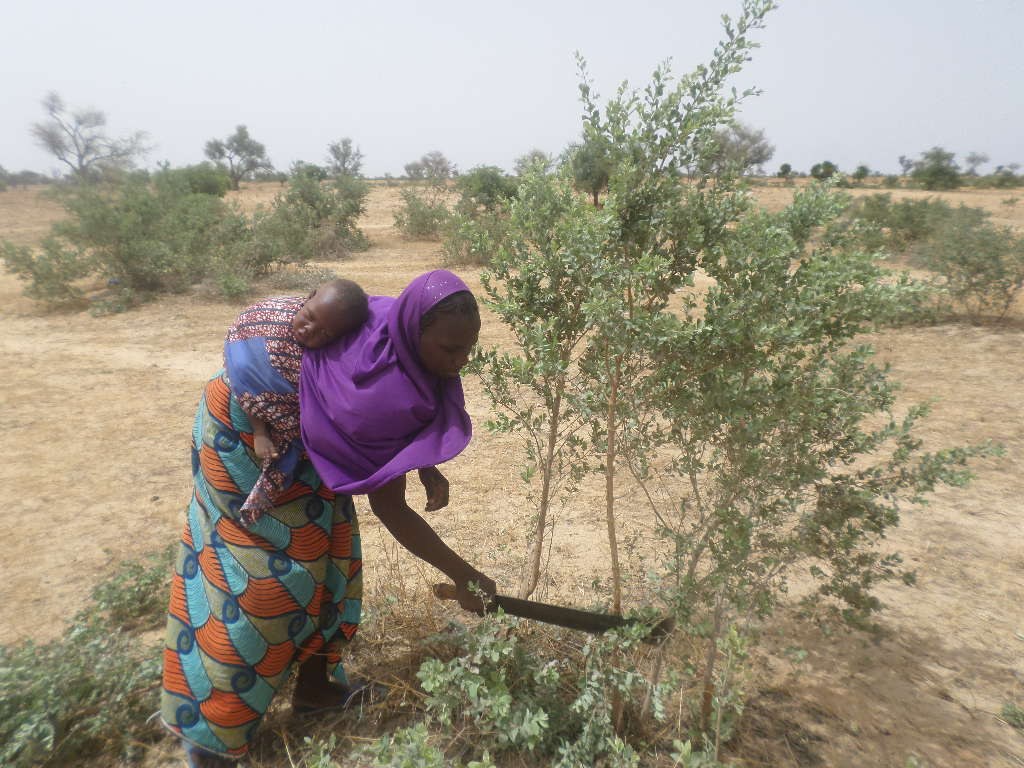
  • Farmer removing side stems from naturally regenerated Guiera senegalensis to enhance its growth a key FMNR practice P Savadogo ICRAF
    News

    Scaling Assisted Natural Regeneration: Learning, Tools, and Global Engagement

    With growing recognition of Assisted Natural Regeneration's (ANR) role in achieving global restoration goals, the Ecosystem Restoration Integrated Program (ERIP), led by Conservation International, and its partners have spent the months equipping practitioners with practical guidance, peer-learning opportunities, and technical resources. From new ANR tools and factsheets to a global training reaching nearly 7,000 participants, 2026 is marking a major milestone in building capacity for ANR across ERIP countries and beyond.

    Card arrow right white
  • UNCCD COP171
    News

    Beyond Projects: What It Takes to Sustain Restoration at Scale

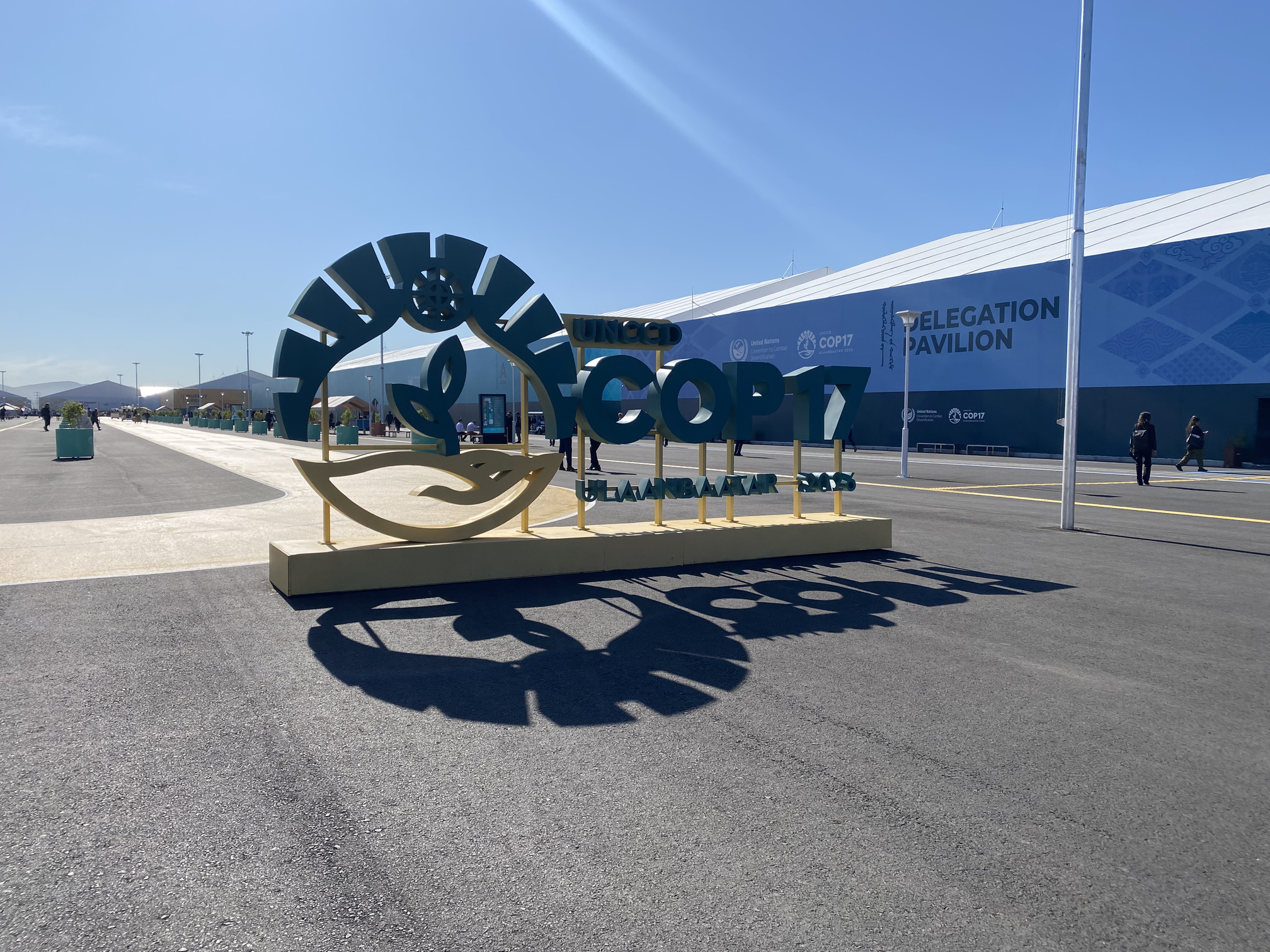
    At the 17th Session of the Conference of the Parties (COP17) of the United Nations Convention to Combat Desertification (UNCCD) in Mongolia, ERIP and its partners hosted a series of discussions on dryland restoration, restoration monitoring, and water resilience, exploring what it takes to maintain momentum, strengthen ownership, support local communities, and scale restoration impact across regions.

    Card arrow right
  • ERIP at UNCCD COP17
    News

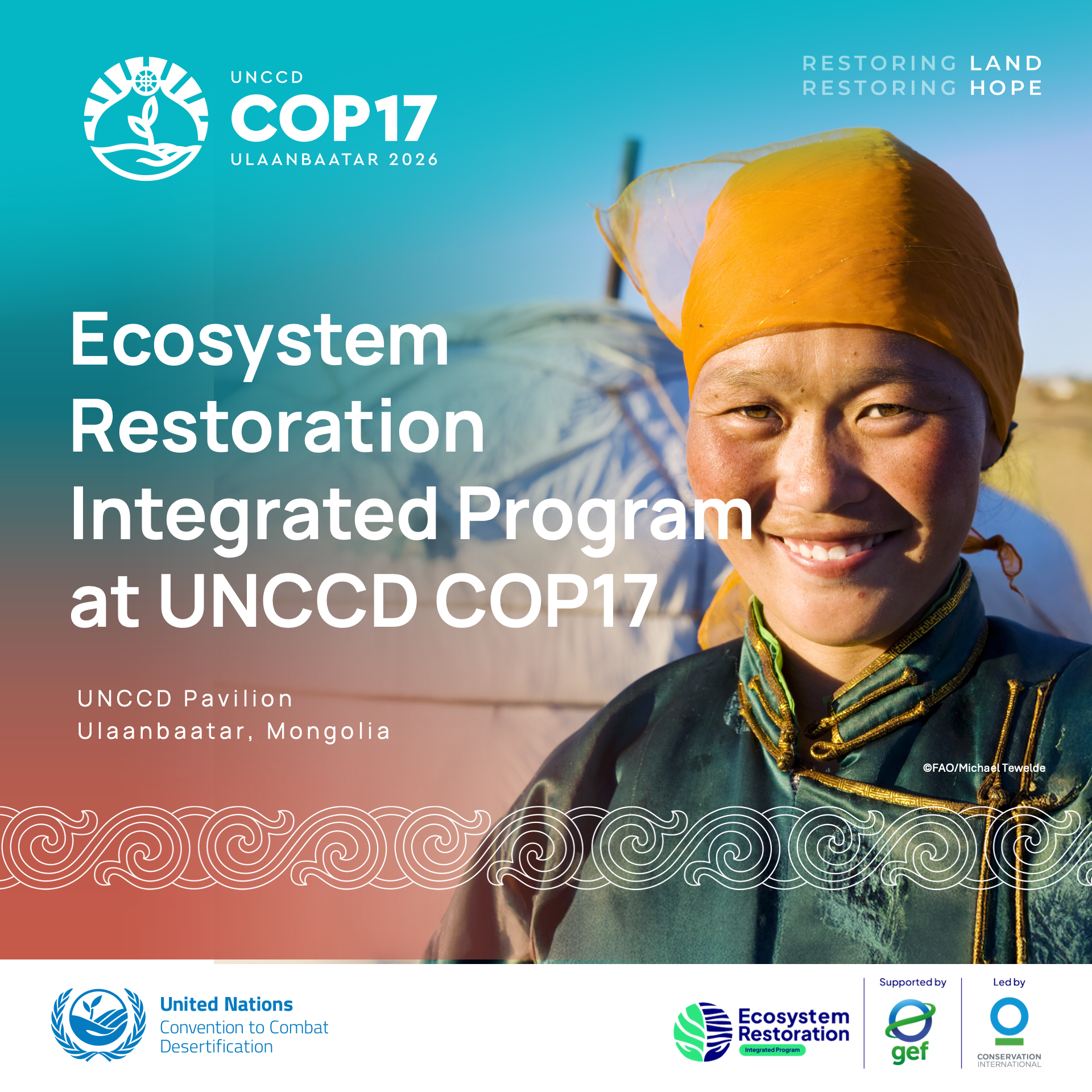
    ERIP at UNCCD COP17: Restoring Land, Restoring Hope

    ERIP child projects focused on restoration in and around protected and conserved areas (PCAs) took part in the Global Knowledge Exchange Workshop on “Strengthening the Effectiveness and Impact of Protected and Conserved Areas,” held from 18–22 May in Chengdu, China.

    Card arrow right